SsD

architecture + urbanism

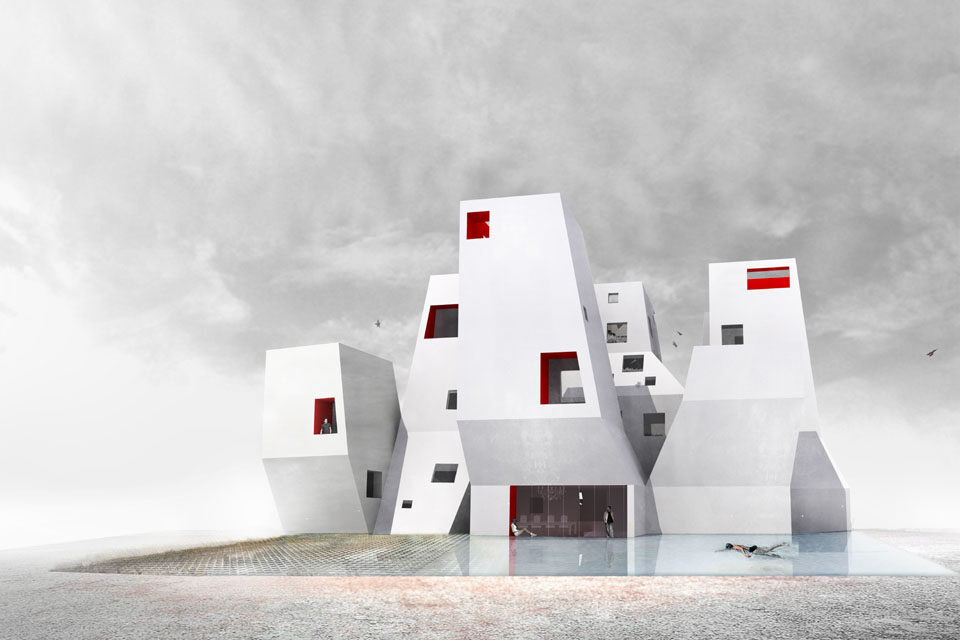
White Block is unwrapped

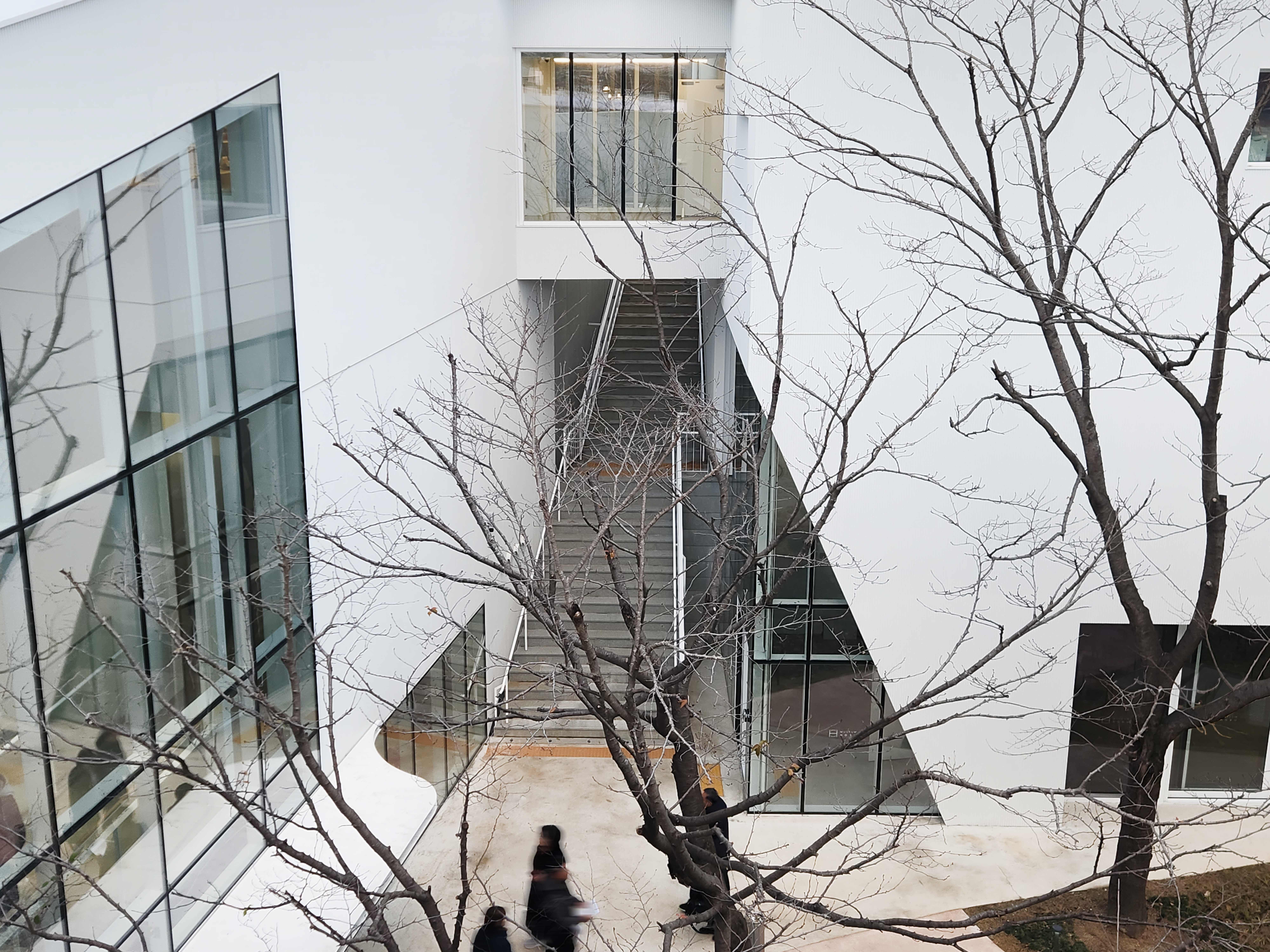
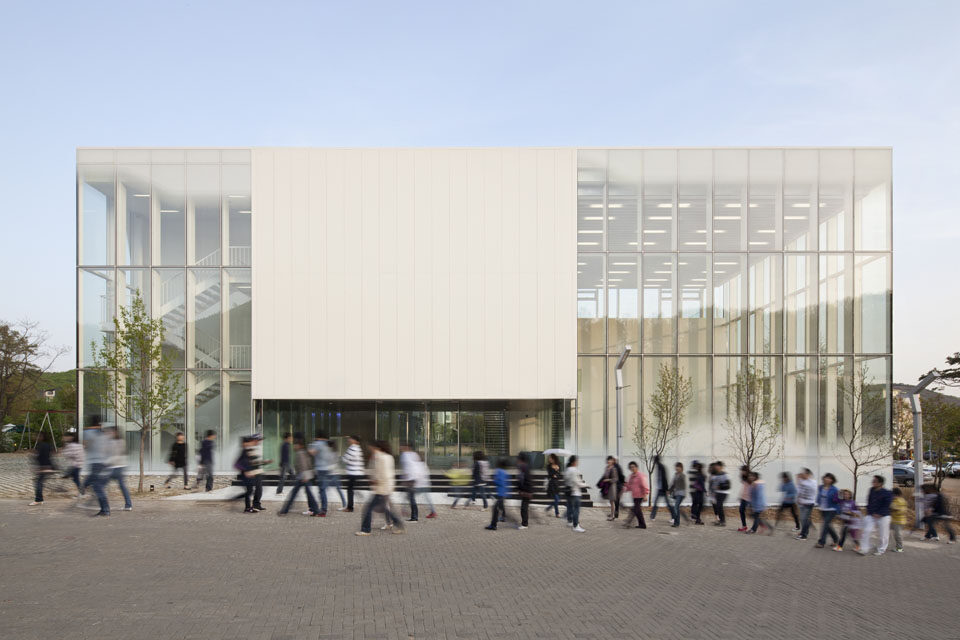
We started the New Years at Heyri by unwrapping what seemed like a giant, building-sized present:  Due to the harshest winter in Korea in 30 years, the Gallery White Block has been completely covered for the last 6 weeks and work has been delayed.  And just like opening a holiday gift we were at first incredulous, eager and elated.  But soon we realized that what was inside was not quite as advertised.  The curtain wall had not been installed exactly as we specified. Nothing that some old-school, on-site brainstorming (and headbutting) can’t fix…

SsD featured in ‘The New Modern House’

The Big Dig House was recently featured in Jonathan Bell’s and Ellie Stathaki’s The New Modern House: Redefining Functionalism.


The Center for Arts at the Armory is completed

In terms of preservation strategies, armories are truly a difficult urban building type.  Once a place for military training, they are now becoming almost wholly obsolete:  Their vast interior drill hall and their monumental footprint makes them difficult to convert to any other urban program including housing.  Meanwhile, many of them appear on highly restrictive state or national historic registers.  This confounds developers further as surrounding land costs and thus development intensity has multiplied around these buildings but the restrictions placed on renovating them makes it impossible to increase their density and make the numbers work.

The Somerville Armory is one such building.  Nestled in an otherwise dense residential zone, it sat underutilized for years, slowly deteriorating.  After the building was courageously acquired by the Highland Avenue Trust, we worked with them, the Arts at the Armory, the City of Somerville, and the Massachusetts State Historical Commission to adaptively re-use the structure into a  regional, 30,000 sf non-profit arts center that houses a multitude of community oriented programs including NGO’s, artists, dance, and music studios and offices, galleries, arts education and after school programs, and a cafe/performance space.  The building’s anchor is the former drill hall which now serves as a multi-use space that host a variety of community programs, concerts, and educational venues.

Braver House completed

The Braver House  is an alternative for older suburbs where houses are being built to the setback line creating buildings much too big for their lots.  Instead we designed a small footprint house but built a screen to the maximum setback line.  This allows indoor spaces to extend to the exterior and also allows us to drastically reduce potable water use by eliminating a good portion of the suburban grass lawn.

Convergent Flux, Korea opens at the Korea Society

Please join us for the opening reception and roundtable for the NY installation of the exhibit, Convergent Flux, Korea first shown at the Harvard Graduate School of Design.

Opening Reception and Panel Discussion
Panel: Taewook Cha, Felipe Correa, Mark Rakatansky, and Soo-In Yang, moderated by Jinhee Park and John Hong
Tuesday, December 7, 2010
6:00 p.m. – 9:00 p.m. (panel at 7:00 p.m.)
The Korea Society
950 Third Avenue, 8th Floor

A special thanks to the Harvard GSD, The Korea Society, and The Architectural League of New York for collaborating in sponsoring this event. 

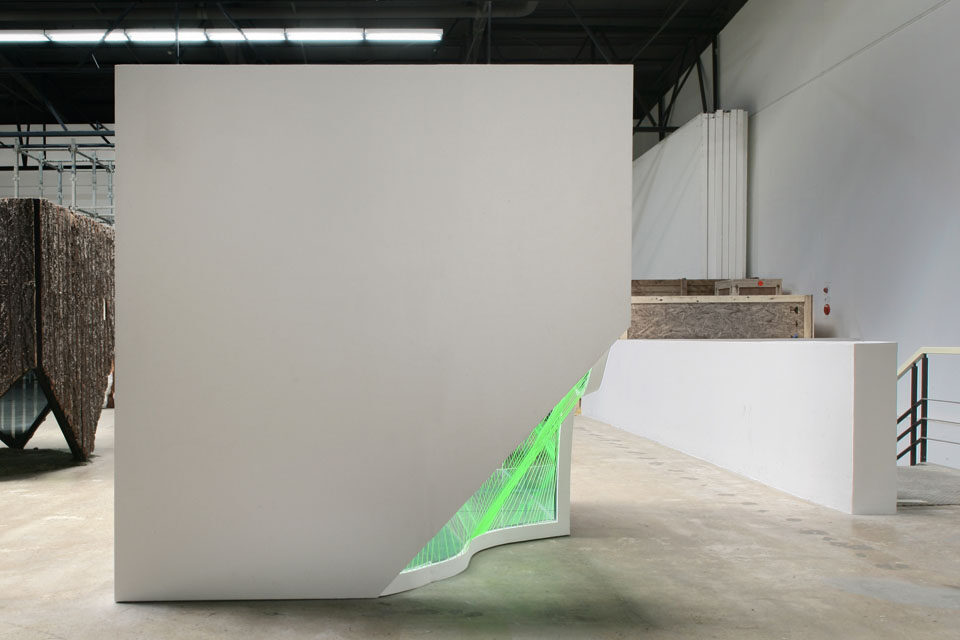
Photo above:  Interactive electronics are being installed by Peter Ortner and Juho Lee of SsD who worked long hours over the weekend to install the exhibit.  Natalee Newcombe (Program Officer of Contemporary Issues at the Korea Society) and Joe Watson also provided crucial help and coordination in the installation.

Framing completed for White Block Gallery

The structural frame for the White Block Gallery has recently been completed.  Matt Johnson of SGH helped us design a ‘wall-umn’ system (wall + column) so that the interior spaces are free of columnar obstructions giving the curators more spatial opportunities to display art and media.  Distributing the load to many smaller columns rather than a few large ones paradoxically allows a higher level of visual connection between inside and outside.

SsD shortlisted for Boston Society of Architects Headquarters

SsD is one of 5 teams shortlisted for the BSA headquarters competition in Boston.   It was an intense period of mutliple deadlines and we are proud to have made it to the final round. After Jinhee and John gave an initial presentation to the jury, Peter Ortner presented the scheme to a larger audience at BuildBoston.   A special thanks to our dedicated team:  Peter Ortner, Juho Lee, Eunkyoung Cho, with additional help from Jeong Jun Song.  Also thanks to our dedicated consultants who provided key insight into the design: LAM partners. Simpson Gumpertz & Heger. Thompson Engineering Company, VAV International Inc., Acentech, 3SI, Green Engineer LLP, and Cafco Construction Management.

Bean Residence completed

The bean residence is a 2400 sf gut renovation in Manhattan. The existing layout fragmented public areas and did not take advantage of natural light.  Through the reconfiguration of the plan and introducing a restrained palette of materials, underutilized spaces become connective zones.  Where the deep floorplate limited the amount of daylight, LED lighting in conjunction with frosted mirrored surfaces emit daylight rendered tones from the side as well as above giving continuity with adjacent sunlit areas.

Jinhee Park and John Hong moderate Taekwondo Park lecture at the Korea Society

The Korea Society, the Architectural League of NY, and SsD welcome Marion Weiss and Michael Manfredi to discuss their winning master plan and concept design for Taekwondo Park in Muju, Korea. Jinhee Park and John Hong will moderate a discussion after the lecture which is part of a series of disucssions leading up the the opening of the exhibit, Convergent, Flux Korea, curated by Jinhee and John.

Please join us for this lecture, Tuesday, November 9th 630pm at 950 Third Ave, 8th Floor, NYC

SsD is selected as a finalist in the Incheon City Design Competition

SsD has been selected as a finalist in an international competition in Incheon, Korea. We propose recovering Incheon’s lost maritime history by recreating an inland sea around its Ahamdo island - now threatened to be infilled by adjacent urban development – allowing it to be an island once again. This sea will incorporate artificial reefs to shelter a delicate wetland ecosystem with an urban wilderness park running through it. A floating pedestrian bridge, reminiscent of the historical path to Ahamdo, will be the new destination that connects Incheon to its new waterfront district.

Jinhee Park and John Hong moderate Songdo IBD lecture at the Korea Society

The Korea Society and SsD welcome Richard Nemeth, Principal of Kohn Pederson Fox, and Hyunjin Koo, Senior Manager of International Relations at Gale International. to discuss the Songdo International Business District Project in Korea. As the first in a series of lectures leading up to the Convergent Flux, Korea exhibit to be held at the Korea Society, Jinhee and John will moderate a discussion after the lecture. Convergent, Flux Korea, curated by Jinhee Park and John Hong, was first exhibited at the Harvard GSD and will now show at the Korea Society beginning December 6th.

Please join us for this lecture, Tuesday, November 2nd 630pm at 950 Third Ave, 8th Floor, NYC

Clover Food Trucks are on the roll

In the last year, we’ve been working with Clover on their food trucks and their new restaurant in Harvard Square.  Boston area residents may have already visited one of the two Clover Food Lab Trucks that are on the roll, one in Kendall Square and the other in Dewey Square near South Station.  For those of you that don’t know Clover, they are an amazing innovation in (dare we say it) ‘fast food.’  But don’t let the connotations fool you:  First of all, the owner, Ayr, is very modest about the little revolution he is starting.  In working through the design with him, we decided early on that there will be nothing in the architecture or marketing materials that screams that Clover is vegeterian, locally sourced, and organic whenever it can be.  What matters here is not making these distinctions (which are too quickly becoming marketing buzzwords), but instead to simply serve up delicious, healthy (and fast) food. 

Starting by recycling decommissioned cargo trucks, the Clover Trucks have been designed to be efficient, low-energy, passively cooled, and abstractly minimal – like a white-board on wheels ready to be written on.  Despite their simple appearance, they are a small small feat of engineering that spans very compact kitchen and storage design to the integration of an i-phone driven POS system spearheaded by Ayr with his affinity for cutting-edge and user-friendly technology. As we refine the design for future trucks, they will be converted to bio-diesel and include solar hot water and photovoltaic panels.  And as we zoom out and think about the larger picture, we hope to not only contribute to the design of the spaces, but also to the rethinking of the larger environmental predicament of our food systems:  how it is distributed, prepared, and consumed.