SsD

architecture + urbanism

Convergent Flux Book Launch at Van Alen and Harvard

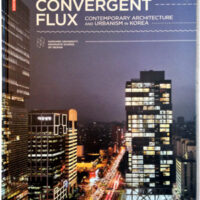
Park and Hong's new book, Convergent Flux: Contemporary Architecture and Urbanism in Korea has been published by Birkhäuser and the Harvard GSD. Please join us for the book launch at the Van Alen Institute or at the Harvard Graduate School of Design.

Van Alen Event
When: Thursday, 25 April, 630pm
Where: Van Alen Institute, 30 West 22nd Street Ground Floor (enter through Van Alen Books), New York, NY 10010

Harvard GSD Event
When: Friday, 26 April, 1pm.
Where: Stubbins (Room 112), Gund Hall, 48 Quincy Street, Cambridge, MA

convergent flux korea

From “hermit kingdom” to economic powerhouse, the small nation of South Korea has experienced vast cultural, societal, and urban shifts in the last century. Although this state of flux is symptomatic of many nations that have undergone rapid industrialization, the story of Korea is somehow more condensed, more marked by upheaval, and through its radical transformation, more able to emerge as a nexus of design culture. Authors Jinhee Park and John Hong examine Korea’s diverse work of the last decade through the lens of five conceptual streams: density, history, topography, materiality, and infrastructure. Please join them in conversation with Mark Rakatansky, Adjunct Associate Professor at Columbia GSAPP, as they discuss new, compelling work that has yet to be introduced to major media in the United States.

» click here for link to Van Alen event.
» click here to purchase book on Amazon

Share Button

Urban Design Tool Featured in Ecological Urban Architecture

ecological urban architecture performance zoning

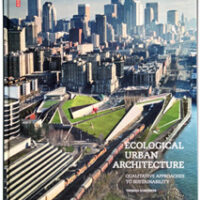
John Hong's article, 'Simulating Interdependent Complexity: Beyond Prescriptive Zoning,' was published in Ecological Urban Architecture. The article outlines applications for Hong's parametric urban design tool developed at the Harvard GSD under a Harvard Real Estate Academic Initiative Grant. By using computation to leverage performance based zoning standards intead of prescriptive ones, the tool demonstrates that there does not need to be in inverse relationship between density and quality of space. Daylighting, cores, proximity to parks, programming, and other factors are simultaneously evaluated for an optimized solution. Stay tuned for a full animated demo of the tool in the upcoming months. A special thanks to the book's author Thomas Schroepfer, and publisher Birkhäuser.

Share Button

New Images of Korea Society Exhibit

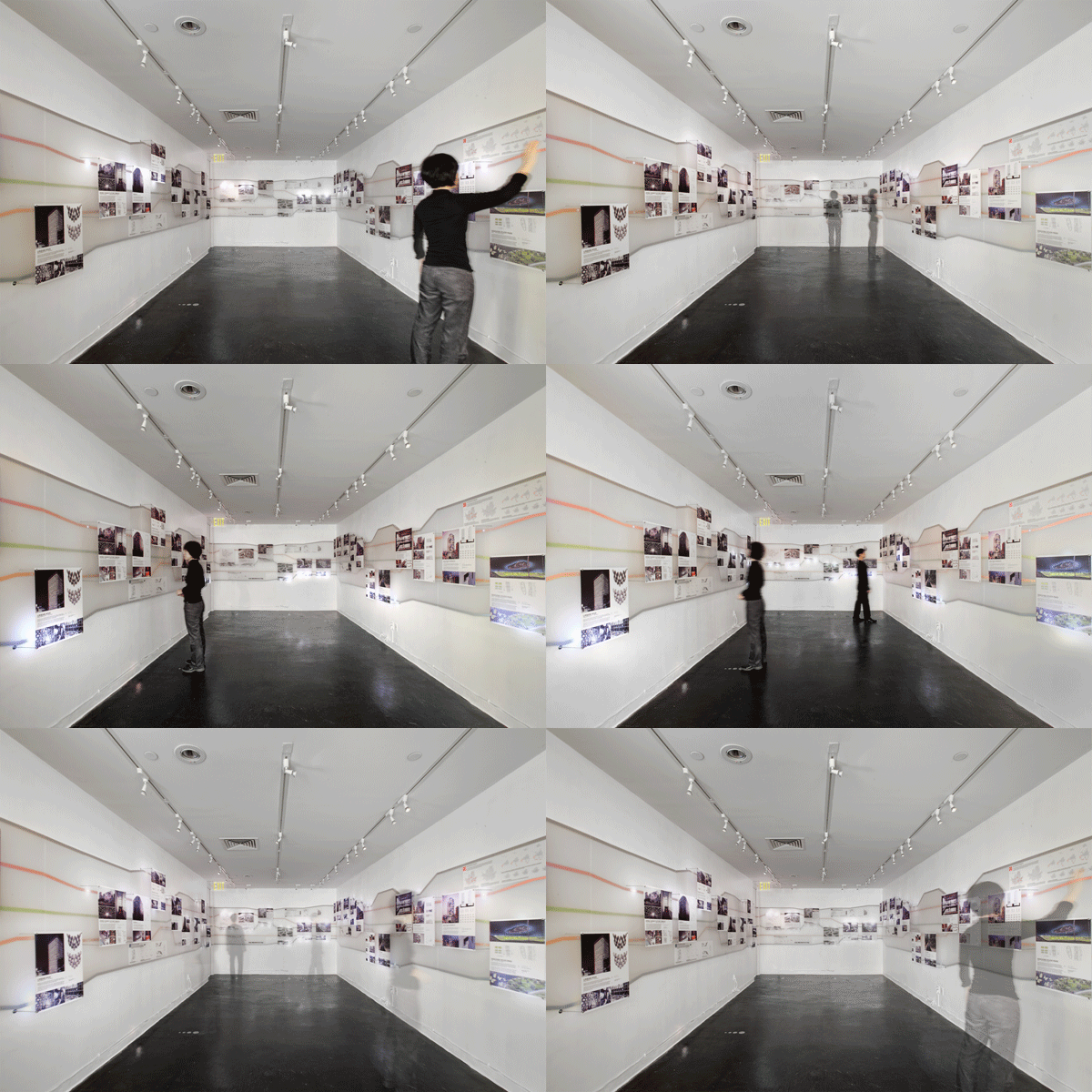
Last year we put on a 'mini' version of the Covergent Flux: Korea exhibit at the Korea Society in New York and we finally got around to putting the images on our website (yes, we are very behind on updates which thankfully means we're busy with projects!). The contents were originally was shown at the Harvard GSD two years ago where it was the first cross-disciplinary exhibit on Korea architecture, landscape architecture, and urban design mounted in the United States. The challenge of the Korea Society version was that in a space 10 times smaller than the GSD's Gund Hall gallery we had to condense the complex information into something legible without oversimplifying the issues. The other major challenge was to honor all the designers that participated in the original exhibit by not editing out any of the projects. Our solution was to use motion sensors triggering LED's so that when one walks around the room, the changing illumination patterns relate the project to the 5 organizing themes as well as to each other. Shifting to an even smaller scale, we are preparing for the launch of the book version of Convergent Flux: Architecture and Urbanism in Korea, in the upcoming new year. Please stay tuned…


Share Button

Convergent Flux – Korea Society

Convergent Flux: Korea Society New York | 2011

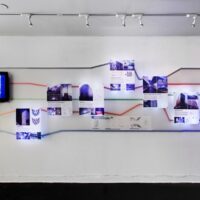
Stemming from a research project and exhibition at the Harvard Graduate School of Design, this interactive exhibition staged at the Korea Society examines contemporary Korea's architecture, landscape architecture, and urban design. The twenty-nine projects shown exemplify five interrelated themes that continue to shape modern Korea's development. The topics of historical transformation, accelerated density, topographical syntax, material identity, and infrastructural alliance, are mapped onto the wall as trajectories that converge and diverge. By utilizing a series of motion sensors that illuminate panels of information, visitors are encouraged to interactively explore each project and its relation to the themes and other projects. In parallel with the exhibit, Jinhee Park and John Hong moderated a series of lectures which included Marion Weiss and Michael Manfredi as well as organized and moderated a roundtable discussion with Taewook Cha, Felipe Correa, Mark Rakatansky, and Soo-In Yang. The research has culminated in the book, Convergent Flux: Contemporary Architecture and Urbanism in Korea.


5 themes represented by colored lines organize the exhibited projects.


The images float in front of the wall while the organizing themes appear as lines running continuously around the room.
 

Lighting behind the panels react to users' movement showing the interrelationship between projects and the 5 organizational themes. 90 minutes of video interviews with the designers give personal context to the work.
 

dot_grey
PROJECT CREDITS:

curators
Jinhee Park  + John Hong

exhibit design and fabrication
Jinhee Park AIA + John Hong AIA, LEED AP (principals in charge)
Frederick Peter Ortner, Juho Lee, Natalee Newcombe, Joe Watson

a special thanks to:
Harvard GSD, The Korea Society, The Architectural League of New York


RELATED PROJECTS:

bac-sasaki mass college of art    
bac sasaki mass art convergent flux    

dot_grey

print post print post
Share Button

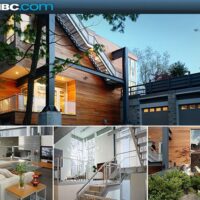
Big Dig House on CNBC

Thanks to CNBC for featuring the Big Dig House in the online story: Salvaged Sanctuaries. Six years after its construction there is still renewed interest not only in the house itself but in the topic of recycling infrastructural waste. Admittedly, one of the limiting factors in this project was the sheer size and weight of the salvaged structure. Any fabrication including cutting of members and creating new connections was prohibitively expensive. Which leads us to the next obvious topic – Precycling… We are still asking the question: What if when we create the inevitable temporary roadways and bridges we already build with the second use in mind? As these infrastructures become 'obsolete' their materials can return to the public realm, precycled for schools, housing, libraries, etc. One thing we learned the hard way on this project is that this kind of comprehensive thinking cannot be implemented without extensive bureaucratic hurdles. Which leads us to the second question: To create significant and necessary change in our built environment, do architects (at least some of us) need to focus their efforts on policy rather than design? Instead of the 'hardware' of our built environments, is its 'software' of codes, politics, and processes in need of  a severe reboot?

Share Button

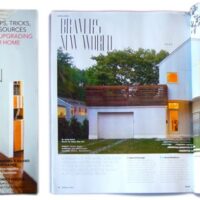
Braver House Featured in Dwell Magazine

The Braver House, a prototype house that proposes an alternative to oversized suburban rebuilds is featured in the February issue of Dwell Magazine.

Share Button

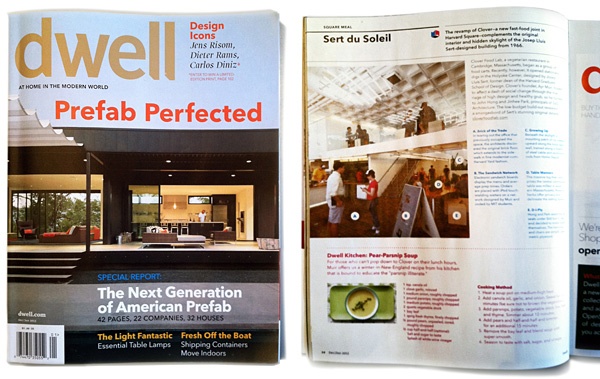
Clover HSQ featured in Dwell Magazine

clover hsq

Part of an larger network that rethinks how fresh food is produced, distributed, and consumed, Clover's first restaurant in Harvard's Square's iconic Holyoke Center is featured in the Dec/Jan issue of Dwell Magazine. Thanks to Aaron Britt who covered the story. To find out more about Clover: www.cloverfoodlab.com

Share Button

Jinhee Park wins Marie Claire Award

Jinhee Park has just won Marie Claire's prominent 'Women on Top' award and is featured in the November issue of Marie Claire.  As the only architect of the group, the issue features 16 women who are leaders in their profession.  Katie Holmes presented the awards at the top of the Hearst Tower.

"Starting out with just a game-changing idea, a bulletproof business plan, or an electrifying design, these women are reinventing their industries and demolishing boys' clubs from the ranks of the military to Silicon Valley. They're all under 40, but those aren't stars in their eyes: They're planning a revolution."  – Sophia Moura, Marie Claire

Share Button

White Block featured in Space Magazine

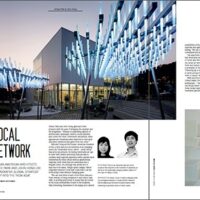
The White Block Gallery was featured in Space Magazine's June issue and we (sort of) made the cover.  Our parametrically developed frit pattern for the curtain wall became the backdrop cover graphic.  We are honored to have been featured: Space is one of the most highly regarded periodicals in the Asian region and its roots date back to its founder, master Korean architect Kim Swoo Geun.  It is not an exaggeration to say that Space has been the major force cataloging, disseminating, and leading architectural culture in Korea.

Share Button

SsD featured in ‘The New Modern House’

The Big Dig House was recently featured in Jonathan Bell's and Ellie Stathaki's The New Modern House: Redefining Functionalism.

Share Button

Jinhee Park featured in Boston Globe


"Thinking Green, Going Global"
Rising star earns national acclaim

By Robert Campbell
[link to online version of article]

press_bosglobe-thinkgreen


Share Button

Verdant Studios in SpaceCraft 2

press_spacecraft2

Verdant Studios is featured in:
Space Craft 2:  More Fleeting Architecture and Hideouts
Klanten, Robert and Lukas Feireiss, ed., Berlin: Gestalten, 2009.


Share Button